



When it comes to visuals, installing a range hood over a kitchen island can be like putting a wall in the middle of a room. You want an open space where you can chat with family while prepping dinner, but you also need to get rid of the smoke and grease from cooking meals.
There’s a newcomer on the market that solves this exact dilemma, and it goes by the name of a downdraft range hood. Sleek with a reimagined countertop design, this kitchen ventilation style keeps sightlines clear while maintaining a clean environment. Learn how these systems work, what the installation process looks like, and which models are currently leading the market as our experts walk you through the requirements for one of these range hoods and whether this style fits your cooking habits.
Save | Downdraft Range Hood Deals
Visit Fred’s Appliance to discover the new way to do kitchen ventilation with downdraft range hoods.
Shop Downdraft Range HoodsHow Downdraft Ventilation Actually Works

While most ventilation systems sit above the stove to catch rising air, these units are installed directly behind or integrated into a cooktop, range, or separately within a countertop. When you turn the system on, a motor creates a high-velocity air current that pulls grease and odors into an intake grill.
The heart of the system is the blower motor, which can either be located inside the unit or mounted remotely beneath countertops.
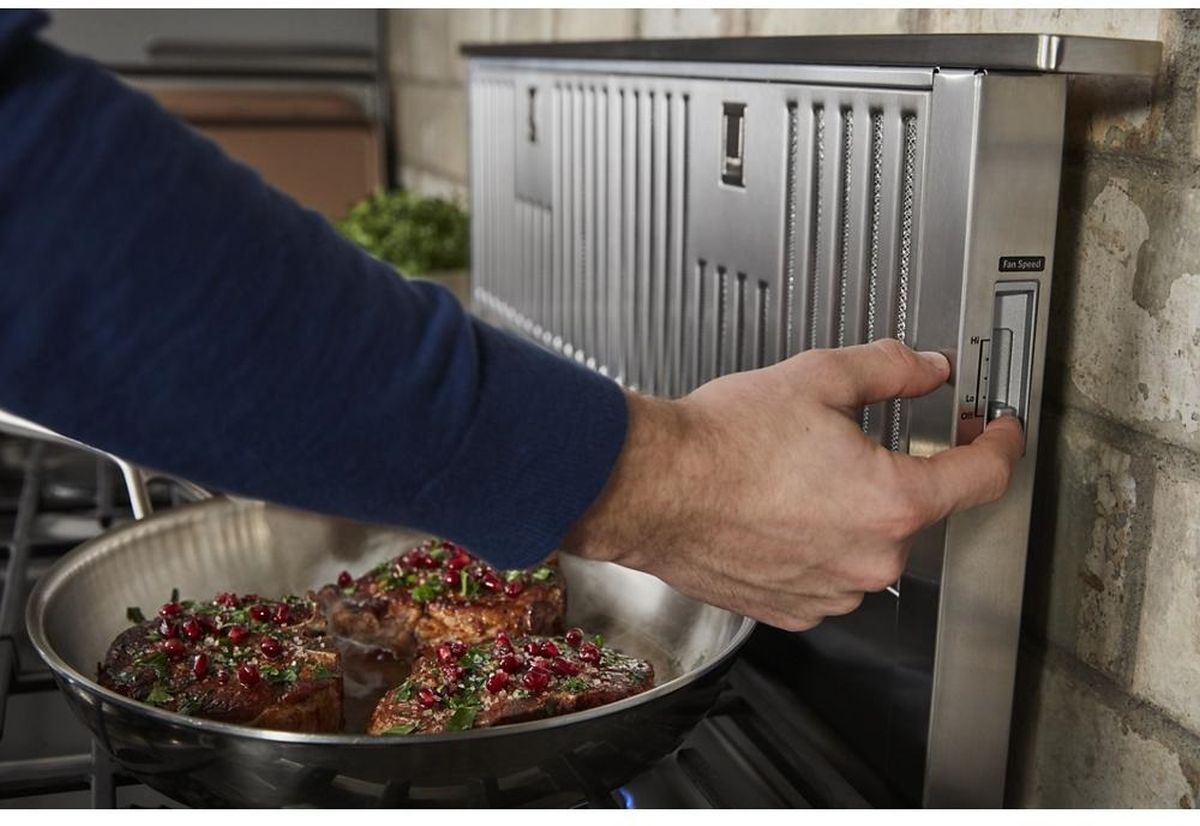
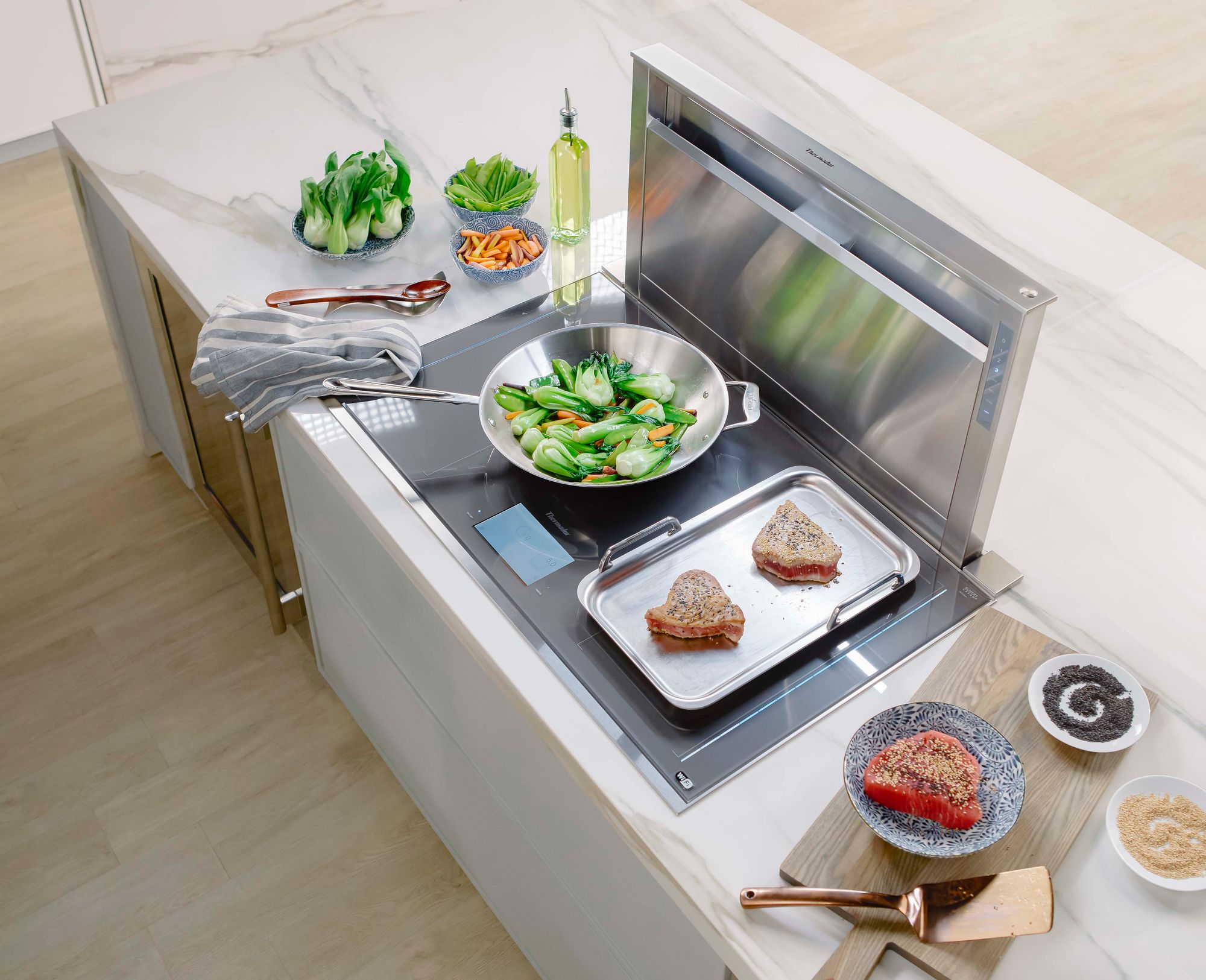
High-performance downdraft range hoods often feature a telescopic downdraft vent that remains flush with the counter when not in use and rises 10 to 18 inches when you start cooking. This mechanical movement provides a minimalist look that disappears when the meal is finished. However, keep in mind the overall height of one of these units plays a major factor in performance. The taller a pop up vent is, the more air intake it can capture over the rims of deep stockpots and cookware.
The CMF rating is also an important detail to keep in mind. That’s because these systems fight against the laws of physics. Since heat naturally rises, the motor has to work much harder than a wall-mounted hood to capture every byproduct of cooking to match the performance of more efficient options like chimney-style hoods. We recommend models with at least 300 CFMs, while more is always better.
Learn More: Modern Island Vent Hood Ideas for Open-Concept Kitchens
Downdraft Range Hoods vs. Traditional Island Hoods
Aesthetics aside, there are a few other important factors to consider when comparing a downdraft range hood vs. traditional range hoods. Here is how they compare in performance, sound ratings, and cost.
| Range Hood Type | CFM (cu. ft.) | Capture Efficiency | Sones Level | Installation Difficulty | Price Range |
|---|---|---|---|---|---|
| Over-the-Range | 150–1200 | High | 5 - 8 | Easy | Entry-level to luxury |
| Downdraft | 300–1200 | Moderate | 4 - 10 | Intermediate | Premium to luxury |
Minimum Clearance for a Downdraft Range Hood
One of the most common mistakes in kitchen planning is trying to install an oven directly underneath a downdraft unit. That’s because housing for the pop-up mechanism and the motor takes up significant space behind the cooktop. You usually need at least 2 to 3 inches of clearance behind the cooking surface just to fit the vent. This often requires a deeper countertop than the standard 24 inches. If you don't plan for this extra depth, you’ll need to install your cooktop too far forward, leaving no room for controls.
Electrical needs are another factor that catch homeowners by surprise. Most retractable range hood models require a dedicated 120V electrical circuit to handle the power of the blower and the lift motor. You cannot simply piggy-back off the circuit used for your dishwasher or garbage disposal. If you are upgrading from a kitchen without a vent, you will need a licensed electrician to run new lines to the island. Checking these clearances and power requirements early prevents expensive cabinet remakes later in the project.
In our experience, if you're installing a downdraft behind a gas cooktop, you should avoid the highest speed settings for the first few minutes of cooking. The powerful suction can actually pull the flame away from the burner, leading to uneven heating until the pan reaches temperature.
Learn More: Do You Need a Range Hood?
Ducting Requirements for Floor-Based Ventilation
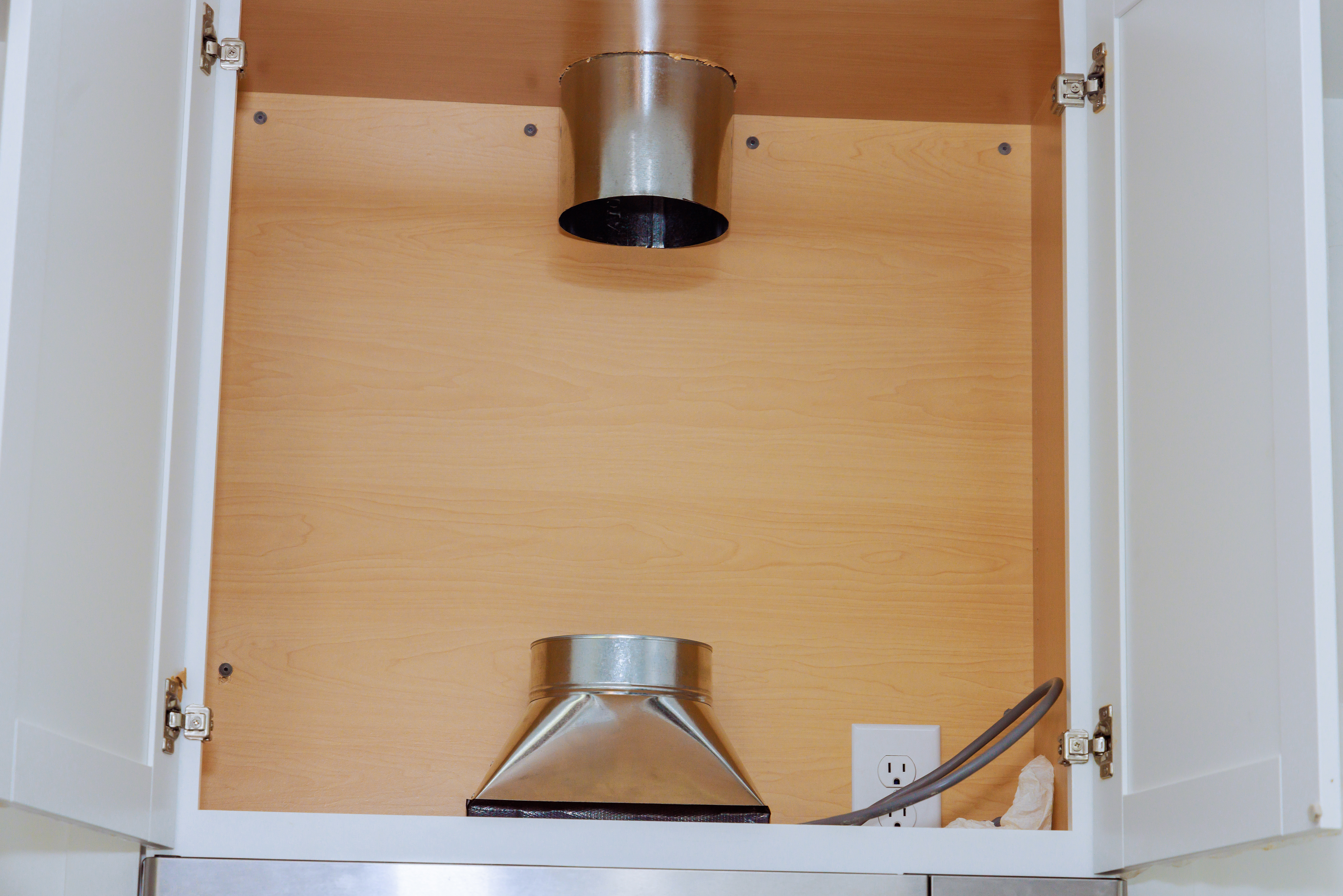
The most significant technical hurdle for downdraft range hood installation is determining where the air goes. Unlike wall hoods that use ducting through a ceiling or a side wall, these units typically vent downward.
- Wooden Floors: If your home has a wooden floor and a crawl space, the process is relatively straightforward by running the 6-inch/8-inch rigid metal ducting through the floor joists to an exterior vent. You must use rigid ducting because flexible hoses create too much friction, which kills your airflow.
- Concrete Slabs: The difficulty increases significantly when you are ducting through concrete slab. This requires cutting a trench into the concrete to lay the exhaust lines. In some new constructions, PVC is used for slab-poured runs, but it must transition to metal once it enters the home.
- Duct Length: You also have to watch your equivalent duct length. Every 90-degree elbow you add to the run significantly reduces the power of the fan. If the line runs too long, air won't have enough force to make it outside, causing grease to settle inside the ducting.
If ducting to the outside is physically impossible, a recirculating downdraft hood is your only alternative. These units pull air through charcoal filters to remove odors and grease before blowing the air back into the kitchen through the toe kick of the cabinet. While this is easier to install, it does not remove heat or moisture from the room. For homeowners who do a lot of heavy searing or boiling, a ducted system is always the better investment for long-term home maintenance services.
Compatibility with Gas vs. Electric Cooktops
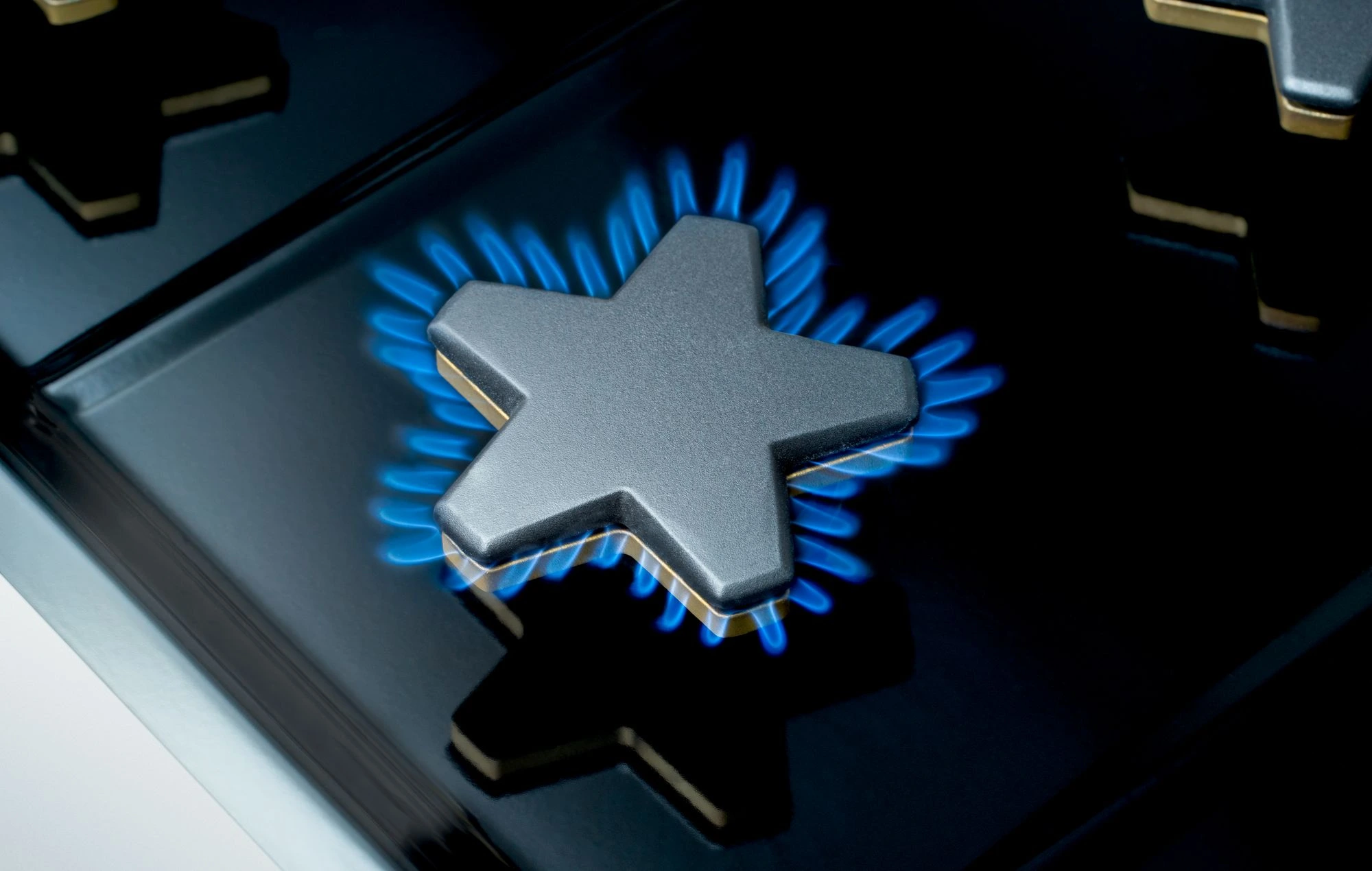
For gas range and gas cooktops users, upgrading to a downdraft vent requires careful planning. Gas burners produce more heat and combustion byproducts than electric or induction surfaces. To handle this, you need to be sure a downdraft range hood has an adequate CFM rating to match the total BTU output of your appliance. A general rule is to have 100 CFM for every 10,000 BTUs.
Induction or electric cooktops are often the preferred pairing for these systems. Since induction doesn't produce an open flame or excess ambient heat, the downdraft doesn't have to work as hard to pull the air. If you are set on using gas appliances, you should look for a professional-grade model with a very high rise to ensure it can reach over the top of the flames effectively.
Advantages and Drawbacks of Downdraft Hoods
There are several reasons to choose this style of ventilation, but there are also performance trade-offs that every buyer should consider.
Pros
Open Sightlines
Keeps sightlines open in kitchen island layouts.
Hidden Design
Disappears into the countertop when not in use for a sleek look.
Special Ceilings
Ideal for kitchens where ceiling-mounted hoods are impossible due to high or sloped ceilings.
Easy Access
Easier to clean than many overhead hoods because the intake is at waist level.
High-End Aesthetic
Provides a modern aesthetic that appeals to buyers in high-end remodels.
Cons
Complex Installation
Requires complex floor-based ducting that can be expensive.
Lower Efficiency
Less effective at capturing cooking byproducts than overhead units.
Storage Loss
Takes up valuable cabinet space underneath the cooktop.
Premium Cost
Generally more expensive to purchase and install than wall-mounted versions.
Premium Downdraft Solutions at Fred's Appliance
Finding the right balance between suction power and style is easy when you have the best brands in the industry to choose from. We carry a wide range of models that fit different cabinet sizes and cooking power needs. Check out our top downdraft range hood reviews!
KitchenAid® 36" Stainless Steel Downdraft Range Hood
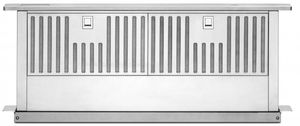
This KitchenAid downdraft range hood offers a powerful 600 CFM motor that can handle the heat from most high-output cooktops. It features a 14-inch rise, which is excellent for capturing steam from larger stockpots. The stainless steel finish is easy to clean and matches well with other professional-grade appliances. It is a reliable choice for families who cook every night and need consistent performance without a bulky overhead presence.
⭐Featured KitchenAid KXD4636YSS Review:
"Powerful and ease of use. Looks very elegant and sharp."
Bosch 800 Series 30" Stainless Steel Downdraft Range Hood
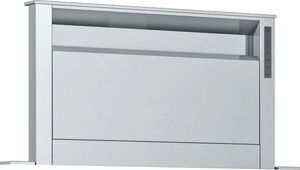
Bosch is known for quiet performance, and the HDD80052UC from the 800 Series lives up to that reputation with a noise rating as low as 2 sones. It integrates seamlessly with Bosch cooktops and features a sleek, low-profile design with a 13-inch rise for good coverage for standard pans. If you for want a quiet kitchen environment where they can still hold a conversation while the vent is running on its highest setting, this pick is a top recommendation.
GE® Universal 30" Black on Black Telescopic Downdraft System
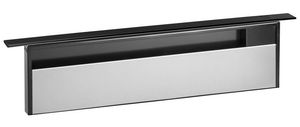
If you have black appliances or a darker countertop, this GE model is a perfect fit. It comes with a 500 CFM performance that is suitable for most electric and induction cooking needs. We love the telescopic design that rises when needed and tucks away for a hidden look. It is one of the more versatile options for smaller kitchens that still need high-quality kitchen island range hood alternatives.
⭐Featured GE UVD6301DPBB Review:
"The vent is much more powerful than our previous vent. The telescopic feature is nice too."
Wolf 45" Stainless Steel Downdraft Range Hood
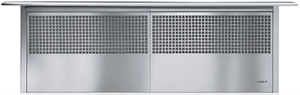
For professional-style kitchens with oversized cooktops, this 45-inch Wolf downdraft range hood is our top choice. The extra-wide intake ensures that even the side burners on a large range between 36 and 42 inches together with a ducted system for maximum air circulation at 600 cubic feet per minute. As an added perk, the Wolf DD45 also features remote control ready operation, so you can adjust power settings without having to be in the kitchen.
Thermador® Masterpiece® 37" Stainless Steel Downdraft Range Hood
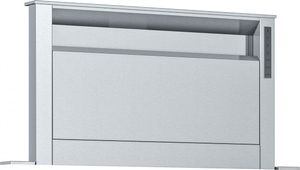
This Thermador downdraft range hood features one of the highest rises in the industry at 18 inches. This makes it significantly more effective at capturing smoke from the front burners of a deep range. It is part of the Masterpiece series, which focuses on high-end design and top-tier technology. If you have a high-output gas range, the extra height on this unit is almost a necessity for proper ventilation with the power to filter up to 1000 CFMs of air.
The future of kitchen ventilation starts with a downdraft range hood, and Fred’s Appliance is the place to start your search. With a full selection of top brands and range of sizes to choose from, we can help you find the right downdraft kitchen fan that matches your kitchen style and cooking needs. Stop by one of our appliance showrooms near you today to learn more!
Frequently Asked Questions about Downdraft Range Hoods
Yes, venting through the floor is the most common installation method for downdraft systems. It requires running rigid metal ductwork through a crawl space or trenching into a concrete slab to reach an exterior wall.
Downdraft vents work with gas cooktops, but they must have a high CFM rating and sufficient rise height to overcome the heat and combustion byproducts. A general rule is to have 100 CFM for every 10,000 BTUs.
A good baseline is 100 CFM for every 10,000 BTUs of total cooktop output. For electric or induction cooktops, a 500 to 600 CFM motor is typically sufficient for standard household cooking.
Most standard wall ovens cannot be installed directly under a downdraft vent because the motor and telescopic housing take up the space required for the oven. Consult the manufacturer's manual and specifications before planning your cabinet layout.
Recirculating models are effective at removing grease and odors through charcoal filters, but they do not remove heat or moisture from the kitchen. They are a helpful solution when traditional exterior ducting is impractical.
Installing a downdraft is generally more expensive due to the need for floor-based ducting and electrical modifications in an island. The units themselves also tend to carry a higher price tag than basic wall-mounted hoods.
Why Trust Fred’s Appliance?
Fred's Appliance is the go-to store for all your appliance needs in the inland Northwest area. Established in 1962, Fred's Appliance has been serving customers for over five decades and counting. With an experienced and knowledgeable staff, Fred's provides a welcoming atmosphere that helps customers find the best product to fit their needs, budget, and lifestyle.
When you shop with Fred's Appliance, you can be sure that you're getting the best brands at the best prices. In our store, you will find a variety of refrigerators, ranges, wall ovens, cooktops, dishwashers, and more. We also carry washers and dryers in both front-load and top-load styles. Not only are we dedicated to providing an unbeatable selection of appliances, but we are equally committed to the local community. We proudly support many charitable organizations throughout Washington, Idaho, and Montana. When you shop at Fred's Appliance, you're not only getting a great product but helping out your neighbors too!
Shop Downdraft Range Hoods at Fred’s Appliance
If you're looking for a great appliance shopping experience, shop kitchen range hoods online or visit one of our showrooms in Washington, Idaho, or Montana to see what a difference buying locally with an experienced retailer makes. Our appliance experts will be happy to teach you more about downdraft range hoods and whether you can install one in your kitchen. Contact us today and discover the perfect appliance for your home.
Learn More:Ductless Range Hoods: When They Work (And When They Don't)